

Intro
Industrial cleaning equipment is relied upon daily across factories, warehouses, distribution centres and large public venues. When machines are out of action, the impact can be immediate — missed cleaning schedules, operational disruption and increased health & safety risk.
Understanding the difference between planned servicing and emergency breakdown support — and how the two work together — is key to keeping equipment reliable and avoiding costly downtime.
For large, high-footfall environments, our approach to servicing is explained in more detail in our guide to industrial cleaning equipment supply and breakdown support for large venues.
What is planned servicing?
Planned servicing is a preventative approach to maintaining industrial cleaning equipment. Rather than waiting for a fault to occur, machines are inspected, adjusted and maintained at regular intervals based on usage and operating conditions.
Typical planned servicing includes:
-
Mechanical inspections and safety checks
-
Battery condition testing and maintenance
-
Brush, squeegee and wear-part replacement
-
Performance testing and calibration
-
Service records for compliance and auditing
This approach reduces unexpected failures and extends the working life of machines.
Why emergency breakdown support is still essential
Even with the best maintenance programme, breakdowns can still happen — particularly on heavily used equipment or live operational sites.
Emergency breakdown support ensures:
-
Rapid response when a machine fails unexpectedly
-
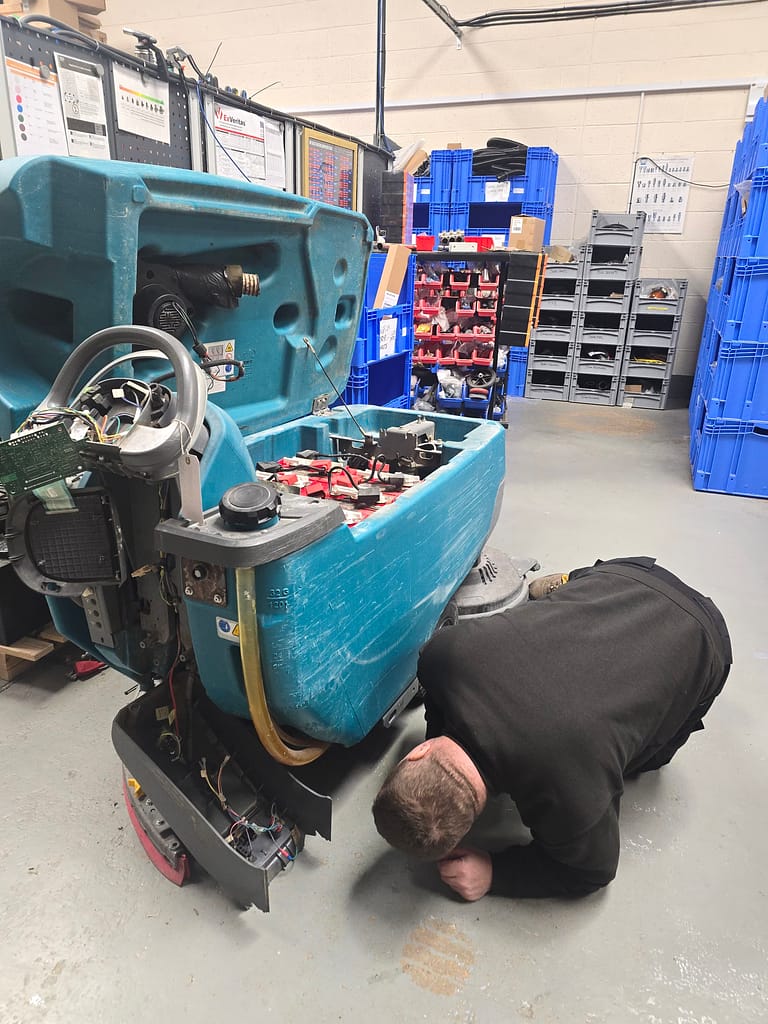
On-site diagnosis and repair where possible
-
Honest advice on repair vs replacement
-
Temporary solutions, such as hire cover, to keep operations moving
For sites operating overnight or on tight turnaround schedules, access to reliable breakdown support is critical.
The risk of relying on breakdowns alone
Some operators delay servicing and rely solely on breakdown call-outs. While this may appear cost-effective short term, it often leads to:
-
Higher repair costs
-
Increased downtime
-
Shortened machine lifespan
-
Disruption during peak operational periods
In most cases, reactive maintenance ends up costing more than a structured service plan.
A balanced approach: planned servicing with responsive support
The most effective strategy combines regular planned servicing with fast, dependable breakdown response.
This ensures:
-
Fewer unexpected failures
-
Faster recovery when issues do arise
-
Better budgeting and cost control
-
Confidence that equipment will perform when needed
For busy sites, this balance provides reliability without unnecessary risk.
Our industrial cleaning equipment servicing plans are designed to reduce unexpected failures while ensuring rapid response when breakdowns occur.
When should you review your servicing strategy?
It may be time to reassess your approach if:
-
Breakdowns are becoming more frequent
-
Machines are ageing or heavily used
-
Cleaning schedules are being disrupted
-
You’re managing multiple suppliers for equipment and repairs
Early intervention often prevents more serious issues later.
If you’re also considering whether continued repairs are the right option, our article on repairing, refurbishing or replacing industrial cleaning equipment may help.
Talk to us about servicing and support
If you’re responsible for maintaining industrial cleaning equipment and want advice on planned servicing, breakdown support or improving equipment reliability, our team would be happy to help.