

Many workplaces handle substances that appear harmless in everyday use but can become extremely dangerous when released into the air as fine dust.
ATEX regulations exist to control the risks associated with explosive atmospheres, including those caused by combustible dust during production, maintenance, and cleaning activities.
Understanding what ATEX means — and how it applies to your workplace — is essential for employers operating in food manufacturing, processing, engineering, agriculture, and industrial environments.
What Is ATEX?
ATEX is the name commonly used to describe the legal framework that applies to explosive atmospheres in the workplace.
The term comes from the French ATmosphères EXplosives and refers to environments where flammable gases, vapours, mists or dusts can mix with air and ignite.
In the UK, ATEX requirements are enforced through the Dangerous Substances and Explosive Atmospheres Regulations (DSEAR). These regulations require employers to identify, assess and control risks where explosive atmospheres may occur.
Put simply:
If your workplace uses or creates combustible dust, ATEX and DSEAR may apply — even if you’ve never had an incident.
Why Combustible Dust Is a Serious Hazard
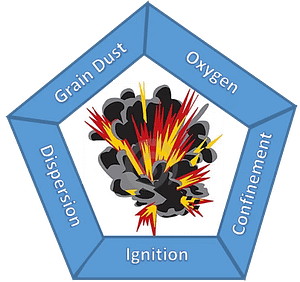
Many materials that are safe in solid or bulk form can become highly explosive when finely divided and suspended in air.
Combustible dust explosions often occur:
-
During cleaning activities
-
During maintenance or shutdowns
-
When settled dust is disturbed
This makes housekeeping and cleaning processes a critical control point under ATEX and DSEAR.
Examples of combustible dust include:
-
Food powders (flour, sugar, starch)
-
Agricultural dusts
-
Metal dusts
-
Plastic and polymer dusts
-
Chemical powders
The Two Key Parts of ATEX Explained
ATEX is made up of two distinct but connected requirements:
1️⃣ ATEX Workplace Requirements (ATEX 137 / DSEAR)
This part focuses on protecting people at work.
Under DSEAR, employers must:
-
Identify substances that could form explosive atmospheres
-
Assess the risk of explosion
-
Eliminate or reduce those risks where possible
-
Implement control measures where elimination isn’t possible
This includes risks introduced by cleaning and maintenance activities.
2️⃣ ATEX Equipment Requirements (ATEX 114)
This part applies to equipment used in potentially explosive atmospheres.
It requires that:
-
Equipment is suitable for the environment it’s used in
-
Equipment does not introduce ignition sources
-
Certified ATEX equipment is selected where required
For example, ATEX-rated vacuum cleaners are specifically designed to prevent sparks, static discharge, or overheating when collecting combustible dust.
Employer Responsibilities Under ATEX and DSEAR
If your risk assessment identifies the possibility of an explosive atmosphere, employers have legal duties to:
-
Carry out and document an explosion risk assessment
-
Implement appropriate control measures
-
Select suitable ATEX-approved equipment
-
Maintain equipment in accordance with regulations
-
Train staff in safe working and cleaning practices
Failure to comply can result in:
-
Serious injury or loss of life
-
Prosecution and enforcement action
-
Business interruption and reputational damage
The Role of ATEX-Rated Cleaning Equipment
Cleaning is often the point at which combustible dust becomes airborne.
Using non-ATEX-rated equipment in hazardous areas can:
-
Create ignition sources
-
Increase explosion risk
-
Breach legal requirements
ATEX-certified vacuum systems are designed to:
-
Safely collect combustible dust
-
Prevent static discharge and overheating
-
Support compliance with ATEX and DSEAR obligations
Need Advice on ATEX Compliance or Cleaning Equipment?
If you’re unsure whether your site, materials or cleaning processes fall under ATEX or DSEAR requirements, our team can help.
R&S Industrial Cleaning Equipment supplies, services and maintains ATEX Type 22 certified vacuum systems and provides expert guidance to help businesses remain compliant and safe.